

We have much experience with hardware prototyping of plastic parts, metal parts and electronic parts. Electro-mechanical prototypes typically require software prototyping, which we also have much experience with.
We are confident we can deliver rapid prototyping solutions for you. The following sections outline some key phases.
Our core business is focused on projects that have a break-even point, such as resale via mass production. To learn more about this see our page on Mcintyre New Product Development.
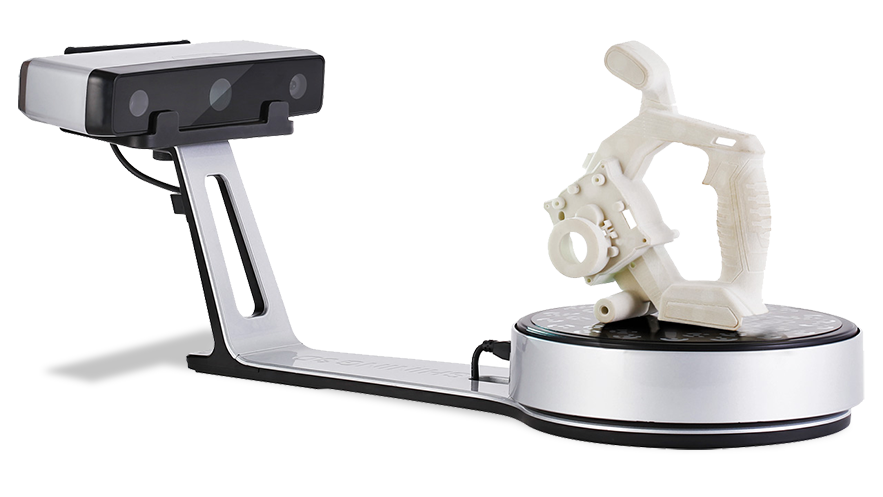
Product Design Phase (Computer modeling from scratch or 3D scanning)
During this phase we assess your requirements to determine if we are best to design your model from scratch using 3D CAD tools, 3D animations tools, or perform a 3D scan an mock up model.
While 3D scanning sounds like an easy option, it is not perfect, and requires much cleaning up of the model. Further it produces a file with point cloud data, which then must be converted to a typical CAD file (e.g. .igs, .stp, and/or .stl). It is because of these reasons, it is generally quicker to create the design from scratch (unless the target requirement is just to reprint the scanned object without any additional design features - which is a service we're not keen on providing).
In terms of electronics - generally we design custom electronics to get the unit cost down, but in some cases we might use off-the-shelve electronics (e.g. Proof-of-concept prototype).
Product Prototyping Phase
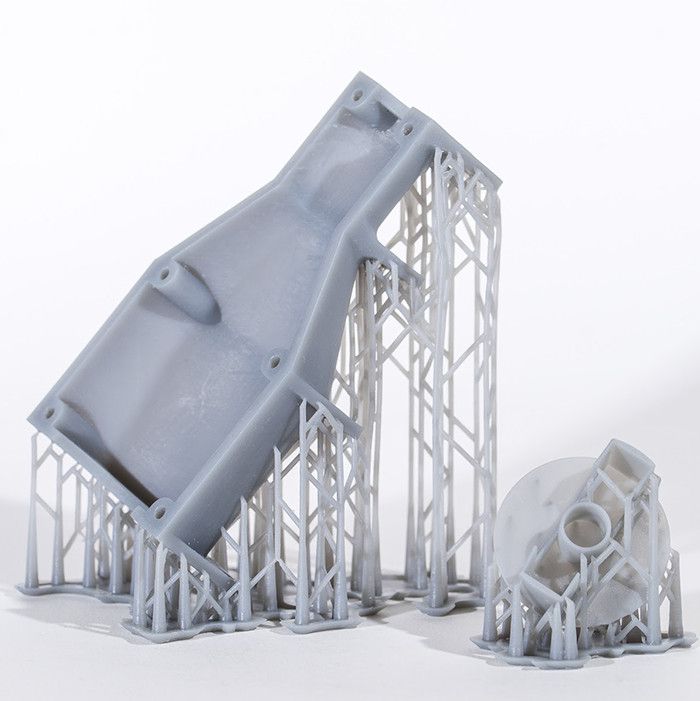
Plastic mechanical parts will likely be 3D printed via various methods such as Fused Deposition Modeling (FDM), Stereolithography (SLA), Selective Laser Sintering (SLS), Multi Jet Fusion (MJF) or CNC'ed in some cases. The material options are kinda endless from rigid to rubbers, such as ABS, PLA, Polycarbonate (PC), Acrylic (PMMA), PET, PEEK, Polyamide aka Nylon (PA), Glass reinforced nylon (PA66+GF), Polyurethane (PU), Polypropylene (PP), Polyvinyl Chloride (PCV), Thermoplastic Elastomer (TPE), Thermoplastic Olefin (TPO), Thermoplastic Polyurethane (TPU), PEBA 2301, Nitrile Rubber (NBR), Polytetrafluoroethylene aka Teflon (PTFE) and more. There are also various finish options such as transparent, transulent, colours, electro-plating, reflective mirror, and screen-printing graphics.
Metal mechanical parts can be 3D printed also, however in our opinion CNC is still the better option. The material options are also kinda endless such as aluminum (AL), steel, stainless steel (SS), brass, etc. There are also various finish options such as blackening, electro-plating (Chrome-plating, Nickel-chrome plating, Zinc-plating, Galvanizing), anodized (black, matte clear), and chromating conversion.
We've also made prototypes using materials such as Carbon Fiber, Fibreglass, Glass wool, DuPont, Vectran, conductive thread, and look forward to playing with Graphene one day.
Electronic parts will involve manufacturing of bare PCBs, then assembling PCB surface-mount (SMT) and through-hole (THT) components via soldering methods such as a stencils, reflow oven, IR heat lamp, hotair rework station, soldering iron, etc.
Hardware bugs are likely, and we'd hack things to make the working prototype. During this process we'll make notes on the design changes required for the next revision.
Rapid 3D Prototyping for Businesses in Mcintyre, Bendigo, Victoria, Australia
COLETEK empowers businesses in Mcintyre, Bendigo, Victoria, Australia, to accelerate product development with our comprehensive Rapid 3D Prototyping service. Our experienced engineers collaborate with you to translate your ideas into tangible prototypes, enabling you to validate concepts, refine designs, and accelerate innovation.
Our process starts with thorough requirements capture and analysis. We delve into your project's technical complexities and collaborate with you to establish clear engineering trade-offs and integration planning. This ensures a seamless transition from concept to tangible prototypes.
We leverage our state-of-the-art prototyping lab to expedite the refinement of your prototypes, incorporating feedback and facilitating iterative design changes. Our commitment to continuous testing and iteration ensures that your prototypes meet your expectations and seamlessly transition into production-readiness.
Remote collaboration is seamlessly integrated into our workflow, enabling seamless interaction and progress tracking regardless of physical location. We support clients across regional and metropolitan areas, ensuring accessibility and responsiveness to your prototyping needs.
With over 150 successful R&D and new product development projects under our belt, COLETEK has established itself as a trusted partner for businesses seeking to accelerate innovation. Let us join you on your journey to bring your groundbreaking products to life.
Let’s build something remarkable together.
Contact UsRapid 3D Prototyping for Mcintyre – Our Clients: Big Brands & Small Businesses


Rapid 3D Prototyping for Mcintyre – Selected Client Testimonials
This is a sample of public feedback from a broader range of client work.
COLETEK proved to be the perfect choice to help us kick our project off. Their analysis of the problem we presented with them with, and their suggestions for the most efficient and effective way to achieve a solution prevented us wasting time and money heading down the wrong path. I'd recommend COLETEK without any reservations.

Working with Luke has been a standout experience. His technical ability is second to none, and he brings a level of dedication and professionalism that makes every project genuinely enjoyable to be part of. Highly recommended.


Founded in 2001, COLETEK is a founder-led Australian engineering company helping clients develop new products, prototypes, electronics, embedded systems, IoT products, AI-enabled devices, intelligent machines, and robotics systems.
We work across electronics, embedded firmware, IoT connectivity, software, mechanics, and real-world testing, with strong experience in multidisciplinary product development, connected devices, computer vision, precision motor control, robotics, and autonomy.
Services Links
Useful Links
Location
Australia-wide support and remote collaboration
Servicing worldwide, notably:
Australia, NZ, UK, USA, Canada, Europe, UAE, and Asia